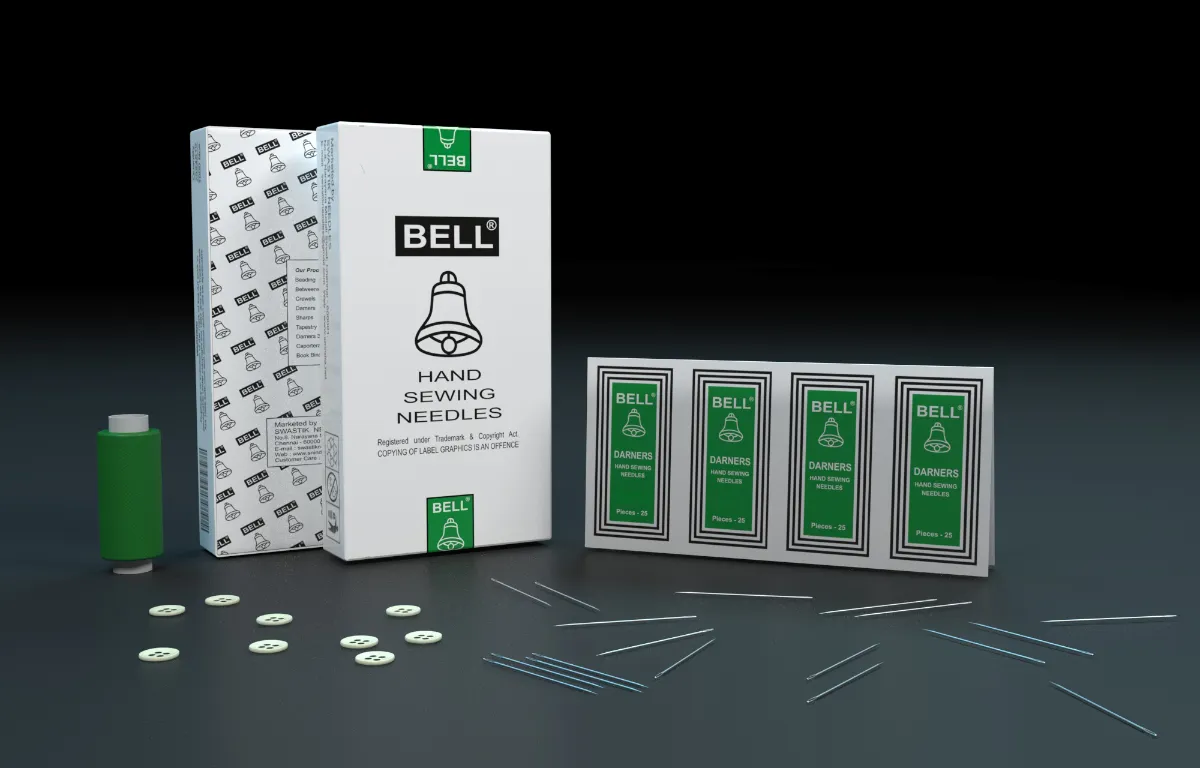
Although hand sewing can appear simple, the sewing needle used can impact the comfort, quality of stitching and condition of the fabric. Thick needles can leave holes visible in heavy material, and thin needles can bend in heavy material. The eye fit should match the thread, too.
By knowing the basic categories of Hand Sewing Needles, one is able to pair the appropriate needle with the project.
Why Needle Type Matters
Hand needles vary in length, thickness, point shape and size of the eye. The features determine the ease of the needle passing through the fabric, as well as the control it provides.
Needles come in different sizes for different fabrics, and canvas stitches are different from cross-stitches and leatherwork stitches.
Sharps for Everyday Sewing
Sharps are a type of hand sewing needle that is a basic type. They are sharp pointed, moderately short, and have a fairly small eye. They are suitable for hemming, mending seams, putting buttons and dressmaking.
A fine sharp will cause fewer holes when using lightweight fabrics. Medium or heavier woven materials might require a heavier sturdier needle that will not bend in the material.
Betweens for Quilting
Betweens likewise known as quilting needles are shorter than sharps. They are short which allows the user more control and aids in making small and even stitches in layers of fabric.
They're often used for hand quilting and intricate tailoring.
Embroidery and Crewel Needles
Embroidery or crewel needles are similar to sharps, but tend to have a longer eye. This makes it easier for them to hold embroidery floss or more than one.
Can be used to embellish woven textiles. The eye needs to be big enough to accommodate the selected thread to be used, but not make the entire needle too thick.
Tapestry and Chenille Needles
The eyes are large and the point of the needle is blunt on the Tapestry needles. These needles are not sharp but pass between the fibres, which makes them ideal for cross stitch, needlepoint, canvas and other open weave work.
The needles used for Chenille are similar in size and eye shape, but have a sharp point. They come in handy for situations where thicker threads are required to be inserted into dense or thick textiles.
Other Useful Types
These are also long and can be used for decorative work, pleating and appliqué, and can be used as milliners or straw needles.
Darning needles are also longer and typically larger eyed to mend using thick thread or yarn. Beading needles are extremely thin and will fit through the small holes in beads.
Needles used for leather or glovers are sharp enough to cut leather, suede and other tough materials. A specially designed leather needle will require less pressure than the use of a standard sharp needle through thick material.
Understanding Needle Sizes
Sewing needles sizes can be perplexing! Generally, the higher the number in the needle family, the finer the needle. For instance, a size 10 sharp is a smaller sharp than a size 3 sharp. Sizes, however, differ depending on the type of needle and manufacturer, and should not be used to make comparisons without any knowledge.
Instead, take into account the weight of the fabric, the fabric structure, the thickness of the thread, and the stitch itself.
Match up the fiber with the fabric.
A sharp or fine embroidery needle is recommended for light weight cotton and fine fabrics. For medium woven materials, a general-purpose sharp can be used.
The advantage of knitted fabrics is that needles do not cut the yarns, but rather pass between them. The open-weave canvas can be done with blunt tapestry needles. For heavy decoration, chenille can be used, and for leather, a cutting point needle is required.
The thread also is important. The needle should pass though the eye without rubbing too much and the needle should cut through the fabric without leaving any damage.
Here are some of the things to look at when you're trying to find the best bulk buyers.
Performance is determined by the consistency of manufacture and type and size, for retailers, craft brands and distributors. A reliable Hand Sewing Needle Manufacturer should have the information about the type of needles, size range of needles, type of finish, type of point design, packaging and its application clearly visible.
Direct attention to checking samples for straightness, smoothness, cleanliness of eyes, consistency of points and secure packaging. Rough eyes can cause unraveling of thread, and uneven points can make it more difficult to sew and may ruin delicate fabrics.
Create a real-world Needle Kit.
This can include embroidery needles for decorative thread, betweens for quilting, tapestry needles for counted work, speciality needles for leather, darning or beading work as well as sharps for repairs.
Labelled by size and type of needles, this helps to avoid confusion in future projects.
Conclusion
The selection of the proper hand-sewing needle depends primarily on matching the point, size, length, and eye with the fabric and thread. General sewing needles work well for everyday tasks, betweens are suitable for quilting, while chenille or leather needles are better suited to more specific materials, and tapestry needles are ideal for open weaves. With these differences understood, choosing the right Hand Sewing Needles becomes much easier, helping achieve cleaner stitches, reduced fabric damage, and a more comfortable sewing experience. Bell Needles can also be considered when looking for suitable needle options for different hand-sewing applications.