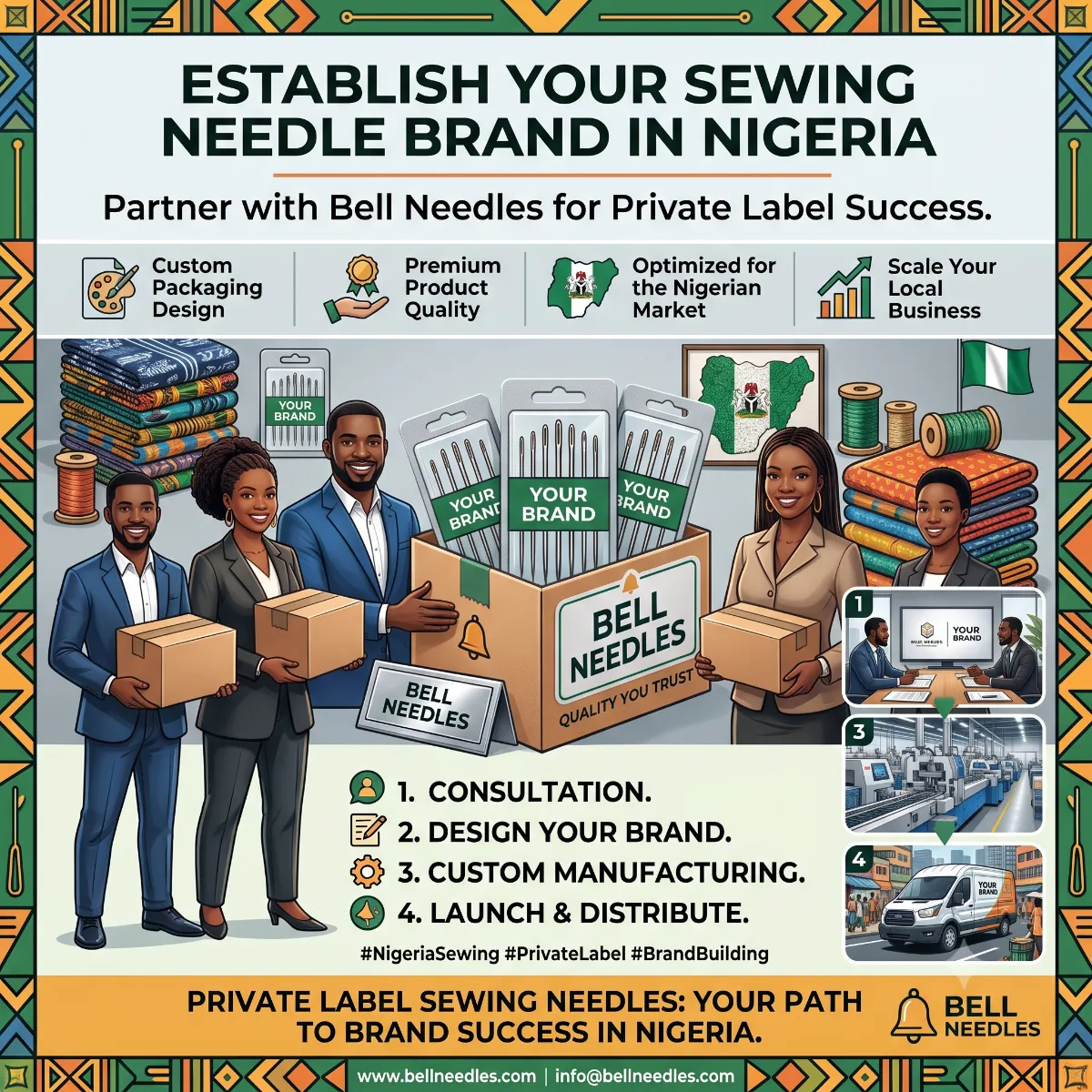
Private labelling gives distributors a way to move beyond simply reselling generic products. Instead of competing only on price, a distributor can build recognition around its own packaging, product range, and customer experience.
For businesses sourcing from a reliable Sewing Needle Supplier Nigeria distributor can work with, private label options can create a stronger position in the local market. The right manufacturing partner can help with product selection, packaging, branding, and repeat supply while allowing the distributor to focus on sales and market development.
Why Private Label Sewing Needles Make Sense
Sewing needles are a repeat-purchase product for tailors, garment makers, alteration shops, sewing-machine dealers, craft stores, and home users.
That makes them suitable for private labelling because customers may return regularly when they recognise and trust a particular brand.
Instead of selling an unbranded or widely available product, distributors can create packaging that reflects their own business identity. Over time, this can make the product easier to recognise on store shelves and in wholesale catalogues.
Start With the Right Needle Range
The first step is choosing products that match actual market demand.
A Nigerian distributor may need domestic sewing-machine needles, industrial machine needles, hand-sewing needles, embroidery needles, darners, or a combination of several categories.
It is usually better to begin with a focused range of commonly requested sizes and systems rather than launching too many variants at once.
Sales data, retailer feedback, and customer enquiries can help identify which needle types should receive priority.
Decide How You Want the Brand to Look
Private label packaging should be practical as well as attractive.
The distributor should decide on the brand name, logo, colours, pack size, product description, needle size information, and any instructions that should appear on the packaging.
Clear labelling is especially important for machine needles because buyers need to identify the correct system and size quickly.
A strong design can make the product look professional without making the packaging overly complicated.
Ask About Packaging Options Early
Not every private label project uses the same packaging format.
Needles may be supplied in envelopes, cards, small boxes, retail packs, or larger wholesale cartons depending on the product and target market.
Distributors should ask what packaging formats the manufacturer can support and whether minimum order quantities change when custom printing is required.
Clarifying these details before artwork is prepared can prevent unnecessary redesign work later.
Request Samples Before Final Approval
Samples are important before moving into a full private label production run.
The distributor should check the needles themselves as well as the packaging quality, print accuracy, readability, and overall presentation.
For machine needles, testing should include compatibility with the intended machine systems and fabrics.
The goal is to make sure the product performs well and that the private label packaging represents the brand professionally.
Build Quality Control Into the Process
Branding creates additional responsibility because customers will associate product performance directly with the distributor’s name.
That makes consistency essential.
A dependable manufacturer should have processes for checking needle straightness, finishing, size accuracy, eye quality, and packaging consistency before shipment.
Distributors should also confirm how quality concerns are handled and what information is available for repeat orders.
Plan Minimum Order Quantities Carefully
Private label production often requires higher minimum quantities than standard wholesale purchases.
This is because customised packaging, printing, and production setup may need a certain volume to be commercially practical.
Distributors should compare the minimum order quantity with expected sales rather than simply choosing the lowest unit price.
Ordering too much of a slow-moving size can tie up cash and warehouse space.
Think About Retail and Wholesale Channels
A private label needle range can be sold through several channels.
These may include sewing-machine shops, tailoring supply stores, fabric retailers, wholesalers, craft stores, marketplaces, and direct distribution to garment businesses.
Packaging may need to work across more than one channel. A pack that looks good in a retail display should also be easy to organise in wholesale cartons.
Understanding where the product will be sold helps shape both the packaging and order size.
Make Repeat Ordering Easy
One of the biggest advantages of private label sourcing is the ability to create a repeatable product line.
Keep clear records of item codes, needle systems, sizes, pack quantities, artwork versions, carton configuration, and previous order volumes.
This reduces confusion when replenishment is needed and makes it easier to expand the range later.
A stable supply arrangement also helps distributors avoid sudden changes in packaging or product specifications.
Consider Shipping and Import Planning
Private label products need the same careful logistics planning as any other imported goods.
Distributors should confirm shipping method, carton dimensions, lead time, commercial documentation, and estimated landed cost before finalising the order.
Freight cost can affect margin significantly, especially when importing large quantities.
Working with a freight forwarder or customs professional can help ensure that documentation and clearance requirements are handled correctly.
Build the Brand Around Reliability
A private label becomes valuable when customers associate it with consistent quality and availability.
That means branding should not stop with the printed pack. Stock planning, customer service, product accuracy, and dependable replenishment all contribute to brand reputation.
A distributor that maintains these standards can gradually develop stronger relationships with retailers and end users.
Conclusion
Private label sewing needles can help Nigerian distributors create a more recognisable product range, strengthen customer loyalty, and reduce dependence on generic resale products. Success depends on choosing the right needle categories, confirming quality, planning packaging carefully, and managing order quantities around real demand.
For distributors interested in sourcing hand and machine sewing needles with private label and export support, Bellneedles.com provides manufacturing and custom packaging options that can support the development of a branded product line for the Nigerian market.